The Balkans are, quite unfairly, often associated with numerous negative connotations as the "bad place" of Europe. Throughout history, the region has been known for its divisions and bloody wars, but rarely will you find mention of its other, positive side — the fact that the Balkans are actually the cradle of the world’s oldest culture, which 7,000 years ago was uniquely peaceful, matriarchal, and centered on female deities. Then came our ancestors, the Indo-Europeans, pastoral and warlike nomads on horseback from the Pontic-Caspian steppe, who brought with them warfare and a patriarchal, warrior society. This region is also the cradle of European civilization as we know it today — ancient Greece created the culture that still dominates Europe.
Today, the Balkans are home to countless cultural monuments spanning from prehistory to modern times, as well as a land of spectacular natural beauty and superb gastronomy. Yet, in the world of travel, it remains unfairly overlooked — which makes it all the more worthy of exploration through this carefully designed tour that also reveals its hidden gems.
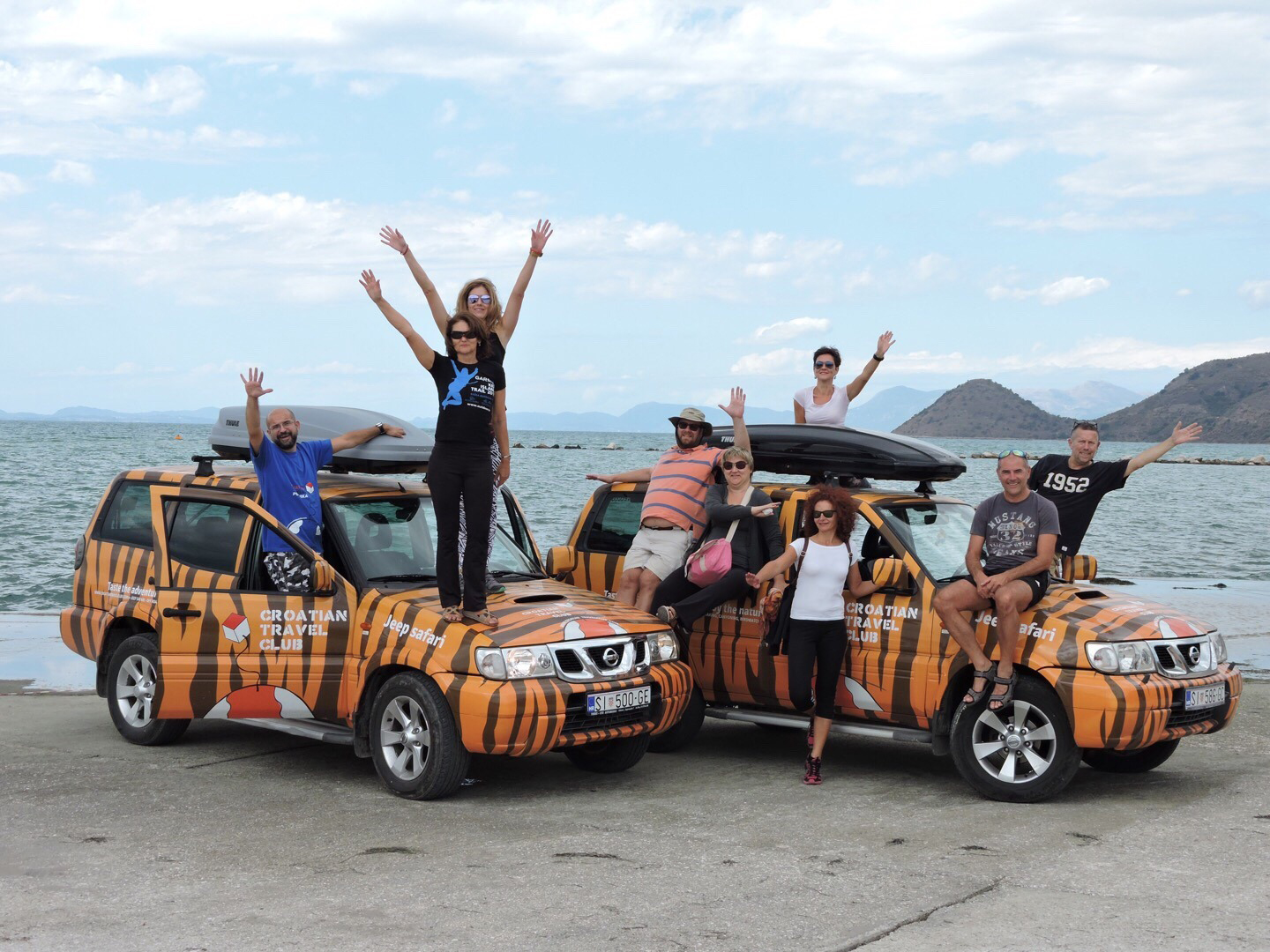
Driving jeeps through the stunning landscapes of Albania, Greece, and North Macedonia — places rarely visited by tourists — we’ll explore numerous UNESCO heritage sites as well as lesser-known ones, from pre-ancient and ancient complexes to stećak tombstones, medieval monuments, and cultural sites from the Ottoman Empire. Naturally, we’ll also confront some of the Balkans’ less flattering aspects, such as the legacy of Enver Hoxha’s communist dictatorship in Albania. To that, we add the many national and protected nature parks we’ll visit — hidden wonders still untouched by mass tourism — and exquisite culinary offerings, all of which make this journey a thrilling experience of discovering a Balkan quite unlike the one you thought you knew.
Our route from Šibenik leads via the mystical fortress of Mogorjelo in Čapljina to the stećaks of Radimlja near Stolac, and onwards to the Illyrian fortress of Rozafa on Lake Skadar, continuing through Albania. We’ll visit Koman Lake nature reserve in the Prokletije mountains by small boat and then proceed to Tirana — once a communist stronghold, now a chaotic city in transition. In the Mediterranean city of Durrës, we’ll enter the largest ancient amphitheater in the Balkans, then follow the lesser-known Albanian coastline past the Illyrian and classical capital of Vlorë to reach the sensational medieval town of Berat, another UNESCO site. Through Llogara National Park we continue to Saranda, near which we’ll explore the remains of what is said to be the most beautiful ancient city — Butrint. Then, crossing into Greece, we’ll discover hidden restaurants along its quiet coast and reach Meteora, another UNESCO marvel, famous for its medieval monasteries "hanging" from natural cliffs. Next comes Ohrid with its natural and cultural monuments, and finally, we conclude our tour in the heart of the Balkans — Skopje. We’ll still have time to explore this fascinating city — a blend of old architecture and modern kitsch — before flying back to Zagreb.
Our journey will sometimes take us along unpaved roads — perfect terrain for jeeps — and through parts of the Balkans that haven’t changed in centuries. We’ll cross rivers by primitive ferries unseen anywhere else in Europe, sail deep into the Prokletije mountains, and taste local gastronomic specialties that reflect the rich mix of cultures which once ruled these lands and left behind their monuments, lifestyles, and exquisite foods. Combined with untouched natural beauty and the fact that our Balkan adventure is led by Jasen Boko, who has explored and written extensively about the region, this is, without a doubt, a first-class experience that will introduce you to a part of European culture you may not have even known existed.
TRAVEL ORGANIZER: Croatian Travel Club d.o.o. – Travel Agency
Travel Package Price Includes:
Travel Price Excludes:
Day 1 (May 17, 2026) ŠIBENIK – SKADAR (Albania)
Meet in Šibenik. Early morning departure by jeeps to Skadar via Nikšić and Podgorica. On the way to Skadar, we’ll visit the Mogorjelo fortress in Čapljina, a unique Roman-era cultural monument with striking similarities to Diocletian’s Palace, as well as the famous stećak tombstones in Radimlja near Stolac (entrance fee 2.00 EUR). Arrival in Skadar (Albania) in the late afternoon. We’ll greet the sunset at Rozafa Fortress, a mythical site rich in legends and one of the Illyrians’ last strongholds before the Roman conquests, offering panoramic views of the entire Lake Skadar. Overnight in hotel.
Day 2 (May 18, 2026) SKADAR – KOMAN LAKE – TIRANA (Albania)
After breakfast, we continue our journey into the Albanian Prokletije mountains to Lake Koman. Next is an optional boat excursion on the lake and its hidden inlets, through one of Europe’s most beautiful canyons, to a spot in the pristine wilderness of the Prokletije where we’ll have lunch. We proceed by jeep through rural, “real” Albania and stunning landscapes to Tirana. Arrival in the evening. Overnight in hotel.
Day 3 (May 19, 2026) TIRANA – DURRËS – BERAT (Albania)
After breakfast, optional sightseeing tour of Tirana, a city blending influences from the ideologies and empires that dominated its capital: Ottoman, Italian, and communist. We start with Tirana’s “spike,” Skanderbeg Square, where in 1991 the rebellious people, weary of Enver Hoxha’s dictatorship, toppled his 10-meter statue — along with Europe’s most brutal regime. On the square, amid daily life, we’ll see the famous Ethem Bey Mosque, one of the few that survived the communist destruction of religious monuments. No visit to Albania — whose dictator was obsessed with building bunkers (173,000 in total, many of which we’ll spot during our travels) — would be complete without seeing one of the most famous. Right in the city center, on the site of a massive underground bunker/nuclear shelter for the “revolutionary leaders,” is now the Bunk’Art museum — a fascinating reminder of dictatorial obsessions and their victims. After touring Tirana, we head to Durrës, a Mediterranean city of intriguing history, where we’ll explore the remains of the amphitheater built for Emperor Trajan, which with a capacity of 20,000 spectators was the largest such structure in the Balkans (entrance fee 3.00 EUR). We continue to Berat for hotel check-in. Optional evening tour of Berat, a place of special charm and archaic architecture that earned it a spot on UNESCO’s World Heritage List. Visit to the Castle quarter, which has “grown into” the former fortress. Overnight in hotel.
Day 4 (May 20, 2026) BERAT – VLORË – SARANDË (Albania)
After breakfast, departure for Vlorë, a city on the Otranto Strait founded by Greek colonists on the Illyrian coast. We’ll use our short stop to see the city’s main attraction: the Muradie Mosque from 1537, a work by the famed architect Mimar Sinan, who built many of the Ottoman Empire’s most important monuments, including the famous Süleyman Mosque in Istanbul. He was so renowned that locals often claim he even contributed to the Taj Mahal — if they tell you that story, don’t mention that Sinan died four decades before Mughal ruler Shah Jahan even dreamed of building it! We continue down the coast, past Orikum — said by some to be Albania’s most beautiful beach, where the brave might even take a dip. Further along, our route takes us through Llogara National Park, where the road climbs over a pass above 1,000 meters before descending back to the sea. This entire stretch of Albanian coastline, barely touched by tourism, is considered by many to be the Mediterranean’s most beautiful. We’ll see for ourselves all the way to Sarandë, arriving in the late afternoon. Overnight in hotel.
Day 5 (May 21, 2026) SARANDË – KSAMIL – BUTRINT – METEORA (Albania/Greece)
After breakfast and hotel checkout, we head to nearby Ksamil. We’ll make a quick stop just to see why it’s considered one of Europe’s most attractive beach destinations. Unjustly underrated! Next is an optional tour of Butrint, one of the Mediterranean’s most beautiful archaeological sites and another Albanian gem on UNESCO’s list. Nestled in a stunning location between lake and sea, opposite the Greek island of Corfu, it was inhabited for millennia by early Illyrian cultures, Greeks, and Romans, each leaving impressive monuments. Our journey into Greece takes us across a river — jeeps and all — by an ancient ferry. We’ll celebrate entering the Greek Mediterranean with an optional lunch of fresh seafood at a typical, non-touristy seaside village restaurant, chosen straight from our network. We continue through Greek Epirus toward Meteora, Greece’s spectacular natural and cultural heritage site. Arrival in Kalambaka. Overnight in hotel.
Day 6 (May 22, 2026) METEORA – ST. NAUM OF OHRID (Greece / North Macedonia)
After breakfast, optional tour of the Meteora complex, a unique UNESCO-protected monument blending culture and nature. These are medieval monasteries built atop spectacular sheer rock pillars. Of the original 24 monasteries, six remain active today. Once reached only by “hand-powered” cliffside lifts, they’re now more accessible. We’ll visit several of the most attractive and publicly open ones, exploring an area that’s a magical fusion of natural and cultural beauty. Afternoon departure for Ohrid. Upon entering North Macedonia at Lake Ohrid, we’ll visit one of its most famous and beautiful monasteries, founded at the end of the 9th century by St. Naum of Ohrid the Miracle-Worker himself, originally dedicated to the Archangels Michael and Gabriel. Today it’s known as St. Naum Monastery. You won’t need more to understand why the Lake Ohrid region, with its rich natural and cultural heritage, is UNESCO-protected — and how delightful an evening can be with dinner and live music at one of the renowned restaurants. Overnight in hotel.
Day 7 (May 23, 2026) ST. NAUM – OHRID – SKOPJE (North Macedonia)
After breakfast, we drive to Ohrid. Optional tour of Ohrid, one of Europe’s oldest urban settlements, dubbed the “Balkan Jerusalem” for its spiritual significance. Explore the old town, St. Sophia Church, and the beauty of icon art. Famous Ohrid pearls attract tourists — we recommend buying only if you know the difference between genuine Ohrid pearls and costume jewelry (Ohrid-made or not). After lunch, continue to Skopje — “Balkan intravenously,” as one Macedonian writer put it. Free evening. Overnight in hotel.
Day 8 (May 24, 2026) SKOPJE
After breakfast, optional sightseeing tour of Skopje. The old town’s heart is the famous bazaar and Old Bridge, a monument to Alexander the Great, alongside new monumental architecture — the pinnacle of Balkan nationalist kitsch. Free afternoon. Optional group dinner at a typical Balkan traditional restaurant. Overnight in hotel.
Day 9 (May 25, 2026) SKOPJE – ZAGREB
At 1:30 PM transfer to the airport. Scheduled departure for Zagreb at 3:55 PM, with arrival in Zagreb at 5:15 PM.
TRAVEL ORGANIZER: Croatian Travel Club d.o.o. – Travel Agency
Important Notes:
Additional Trip Notes:
Hotels on the Trip:
Indicative Prices for Optional Excursions per Person:
Kralja Zvonimira 2, Šibenik, Croatia
MBS: 110054569 MB: 4431448
OIB: 51216017298
ID code: HR-AB-22-110054569


Copyright © 2026/ Croatian Travel Club Ltd.
Travel agency
All Rights Reserved
Web design & development: